


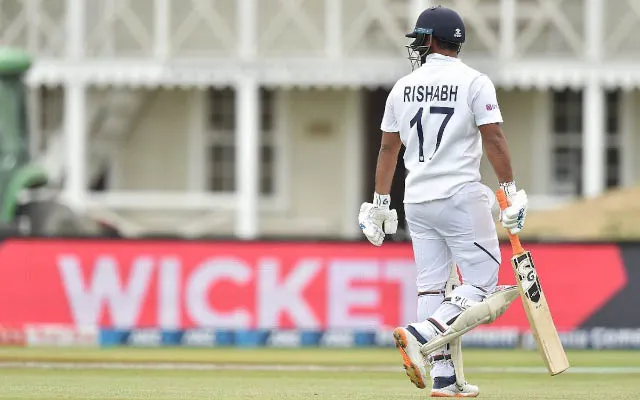
Test cricket comeback stories offer a unique window into the human spirit, showcasing how players navigate the grueling five-day format to redeem their careers or lead their teams to impossible victories. Unlike shorter formats where a quick flurry of runs can change momentum in minutes, the long-form game requires a sustained psychological and physical battle that tests every fiber of an athlete’s being.
There is something inherently romantic about a player who has been written off by the media, the fans, and even the selectors, only to fight their way back onto the hallowed turf. These narratives are not just about sport; they are about the refusal to accept defeat in the face of mounting criticism and personal doubt.
In the world of professional cricket, being dropped from the Test side can feel like a finality, a closing of a door that often leads to a quiet exit from the international stage. Yet, for a select few, this rejection becomes the fuel for a transformation that eventually leads to a triumphant return.
The history of the game is peppered with moments where a team was down to its final thread, staring at an innings defeat, only for two individuals to forge a partnership that transcends the scorecards. These instances remind us why we sit through days of play, waiting for that one miraculous turn of events that flips the script entirely.
The Psychological Weight of Test Cricket Comeback Stories
The mental fortitude required to launch a comeback in the five-day arena is immense because there is nowhere to hide when things go wrong. When a batter returns after a long hiatus, every ball feels like a trial, and every run is a statement of intent to those who doubted their longevity.
We often talk about technical adjustments, such as a change in the grip or a shift in the stance, but the real work happens in the mind during those months of exile. Players often describe the “dark night of the soul” where they have to decide if they still have the hunger to wake up at dawn and face the bowling machine for hours.
For a bowler, the road back is often paved with ice packs and grueling physiotherapy sessions. Returning from a career-threatening injury to bowl at high speeds again is a feat of modern medicine combined with an old-fashioned work ethic. It is this intersection of physical pain and mental resolve that makes these stories so compelling.
The fans play a significant role in these narratives as well. There is a palpable energy in the stadium when a beloved veteran walks out for their second coming. The roar of the crowd can be both a source of immense pressure and a wave of support that carries a player through the nervous opening overs of their return.
Analyzing Historical Test Cricket Comeback Stories and Their Impact
Perhaps no story in the modern era carries as much weight as India’s miracle at Eden Gardens in 2001. After being forced to follow on by a dominant Australian side that had won sixteen consecutive matches, the duo of V.V.S. Laxman and Rahul Dravid produced a masterclass that changed the course of Indian cricket history.
They batted for an entire day without losing a wicket, defying one of the greatest bowling attacks ever assembled. It wasn’t just a comeback in the context of a single match; it was a shift in the collective consciousness of a nation, proving that no situation is truly hopeless if you have the patience to see it through.
Then we have the individual resilience of players like Mohinder Amarnath, often referred to as the “Comeback King” of Indian cricket. Amarnath was dropped multiple times throughout his career, often after facing terrifying pace attacks that resulted in broken teeth and concussions.
Each time he was sidelined, he returned with a sturdier technique and an even braver heart. His ability to face the world’s fastest bowlers after being physically battered is a cornerstone of test cricket comeback stories that older generations still recount with awe. He proved that technique is vital, but courage is the non-negotiable ingredient for survival.
Moving to more recent times, the 2019 Ashes provided us with the Herculean effort of Ben Stokes at Headingley. England had been bowled out for a mere sixty-seven runs in their first innings, a humiliation that seemed to guarantee an Australian victory. What followed in the fourth innings was a display of controlled aggression and tactical genius.
Stokes’ partnership with Jack Leach, who contributed a legendary one run, remains a peak example of how a team can claw its way back from the brink of extinction. The sight of Stokes hitting the winning runs with a roaring crowd behind him serves as a reminder that Test cricket is the ultimate stage for individual heroism and collective grit.
The Return from Personal and Professional Exile
Not all comebacks are rooted in injury or poor form; some are about the redemption of a shattered reputation. The story of Steve Smith’s return during the 2019 Ashes is a masterclass in blocking out the noise. After serving a year-long ban for the sandpaper gate scandal, Smith walked into a stadium filled with boos and hostility.
Instead of crumbling under the weight of public shame, he responded with twin centuries in his first Test back. It was an almost surreal display of concentration, as if he had spent his year away solely visualizing how to dismantle the English attack. By the end of the series, the boos had turned into grudging respect.
This type of comeback requires a level of mental shielding that few humans possess. To perform at the highest level while being the target of global scrutiny requires a person to find a quiet place within themselves where only the ball and the bat exist. Smith’s journey from villain to hero is one of the most polarizing yet fascinating test cricket comeback stories in the books.
Similarly, we can look at the career of Shane Warne, who faced his own share of controversies and a significant ban before returning to reclaim his throne as the king of spin. His comeback was marked by a renewed sense of purpose and a mastery over his craft that seemed even more refined than before his absence.
Physical Resurrection and the Battle Against the Body
Dennis Lillee is a name that resonates with anyone who understands the physical toll of fast bowling. Early in his career, he suffered from stress fractures in his back that many doctors thought would end his playing days. At that time, such an injury was often considered a permanent stop sign for a speedster.
However, Lillee underwent a radical change in his bowling action and a rigorous fitness regime that was ahead of its time. He returned not just as a fast bowler, but as a smarter, more calculated operator who knew how to use the pitch to his advantage. His 355 Test wickets are a testament to his refusal to let his body dictate the end of his career.
In a similar vein, the longevity of James Anderson and Stuart Broad is a slow-burn comeback story in itself. Both bowlers have faced periods where they were considered too old or too slow for the modern game. Yet, through constant adaptation and a relentless focus on fitness, they managed to stay relevant well into their late thirties and early forties.
Every time a critic suggested it was time for them to retire, they would produce a match-winning spell that silenced the conversation for another year. This sustained excellence is a form of comeback that happens every single season, as they prove their worth over and over again to a skeptical sporting world.
The Role of Tactical Innovation in Career Longevity
Sometimes, a comeback is facilitated by a change in role within the team. A top-order batter who struggles with the new ball might find a second lease on life as a middle-order accumulator. This tactical pivot requires a lack of ego and a willingness to learn a new way of playing the game late in one’s career.
We have seen legendary players like Jacques Kallis or Kumar Sangakkara refine their games as they aged, becoming more efficient and less prone to risky shots. Their “comeback” was a transition into a more mature version of themselves, allowing them to dominate the scoring charts long after their initial peak had passed.
For spinners, the comeback often involves the development of a new delivery or a change in flight and pace. As batters become more aggressive, spinners must reinvent their bag of tricks to stay one step ahead. A bowler who was once figured out by the opposition can suddenly become unplayable again simply by adding a subtle variation to their repertoire.
This constant evolution is what keeps the format alive and thriving. The battle between the bat and the ball is never static; it is a moving target that requires players to be perpetual students of the game. Those who stop learning are the ones who never make it back from a slump.
How Underdog Teams Redefine Test Cricket Comeback Stories
It is not just individuals who provide these inspiring tales; sometimes it is an entire nation. The rise of Sri Lanka in the 1990s or the recent resurgence of the West Indies in specific Test series highlights the collective power of a team fighting against the narrative of decline.
When Sri Lanka won their first Test series in England, it was a comeback for a nation that had long been treated as an outsider in the elite circles of the sport. It proved that talent exists everywhere and that the structure of the game must expand to accommodate those who are willing to fight for their place at the table.
More recently, Shamar Joseph’s performance for the West Indies at the Gabba in 2024 is a classic example of a “from nowhere” comeback. A young man from a remote village, playing with a broken toe, dismantled the world champions on their home soil. It was a story that felt like it belonged in a movie script rather than a real-life sports broadcast.
These collective test cricket comeback stories are vital for the health of the game. They ensure that the power balance in international cricket remains dynamic and that the traditional giants can never afford to be complacent. When an underdog wins, the entire cricketing world pauses to take notice.
The Influence of Domestic Cricket in the Redemption Process
For most players, the road back to the national side leads through the unglamorous world of domestic cricket. Playing in front of empty stands on slow pitches is where the real character of a player is tested. It is here that they must prove they have the hunger to score the “boring” runs and bowl the long, unrewarded spells.
Coaches often look for this hunger when deciding who to recall. A century in a high-pressure domestic final often counts for more than a dozen centuries in the nets. It shows that the player has regained the ability to handle the match-day nerves that come with representing their country.
Domestic cricket acts as a crucible where the technical flaws that led to a player being dropped are ironed out. Without the pressure of the international spotlight, a player can take the time to deconstruct their game and rebuild it from the ground up. This period of quiet reflection and hard work is the unsung hero of every great return.
Many players credit their time back in county or state cricket for giving them a fresh perspective on the game. It reminds them of why they started playing in the first place—for the love of the sport rather than the fame or the financial rewards. This reconnection with their roots is often the final piece of the puzzle.
The Cultural Significance of the Comeback Narrative
Why do we love these stories so much? Perhaps it is because they mirror the struggles we face in our own lives. We all face setbacks, rejections, and periods where we feel like our best days are behind us. Seeing a sportsperson overcome these obstacles on a global stage gives us a sense of hope and vicarious triumph.
The “comeback” is a universal theme in storytelling, and Test cricket provides the perfect canvas for it. The slow pace of the game allows the drama to build, and the individual nature of the battle between the batter and the bowler creates a high-stakes environment where every action has a consequence.
When a player finally reaches that milestone after years away, the emotion is visible on their face. It is a mixture of relief, vindication, and pure joy. These moments become etched in the memories of fans, often more so than the routine victories of a dominant team. We remember the struggle as much as we remember the success.
The resilience shown in test cricket comeback stories also serves as a benchmark for future generations. Young players entering the system are taught that being dropped is not the end, but rather an opportunity to improve. It fosters a culture of perseverance that is essential for the longevity of the sport’s most traditional format.
The Evolution of the Comeback in the Age of Social Media
In the past, a player could go away and work on their game in relative privacy. Today, every failure is analyzed by thousands of people online within seconds. This added layer of public scrutiny makes the modern comeback even more difficult. A player must possess an incredible “mental filter” to ignore the constant stream of negativity.
On the flip side, social media also allows fans to follow a player’s journey back to the top more closely. We see the training videos, the recovery sessions, and the humble domestic performances. This creates a stronger bond between the player and the audience, making the eventual return feel like a shared victory for everyone who followed the journey.
This digital age has changed the way teams manage player mental health as well. Most international sides now have dedicated psychologists to help players navigate the highs and lows of their careers. This professional support is often the difference between a player giving up and a player deciding to fight for one more chance.
The narrative of the comeback has become more transparent, but no less powerful. Whether it is a veteran looking for one last hurrah or a youngster trying to prove they belong, the essence of the story remains the same. It is a journey of self-discovery that concludes with a return to the greatest arena in the sporting world.
As long as the five-day game exists, we will continue to witness these incredible transformations. The format itself is designed to exhaust and expose, but it is also designed to reward those who possess the patience to wait for their moment. Each new series brings the potential for a new legend to be born or an old one to be reborn, keeping the flame of Test cricket burning bright for years to come.
Read also :-
new zealand national cricket team vs sri lanka national cricket team match scorecard
new zealand national cricket team vs zimbabwe national cricket team match scorecard
south africa national cricket team vs england cricket team match scorecard
west indies cricket team vs bangladesh national cricket team match scorecard
australian men’s cricket team vs sri lanka national cricket team match scorecard
australian men’s cricket team vs india national cricket team match scorecard