


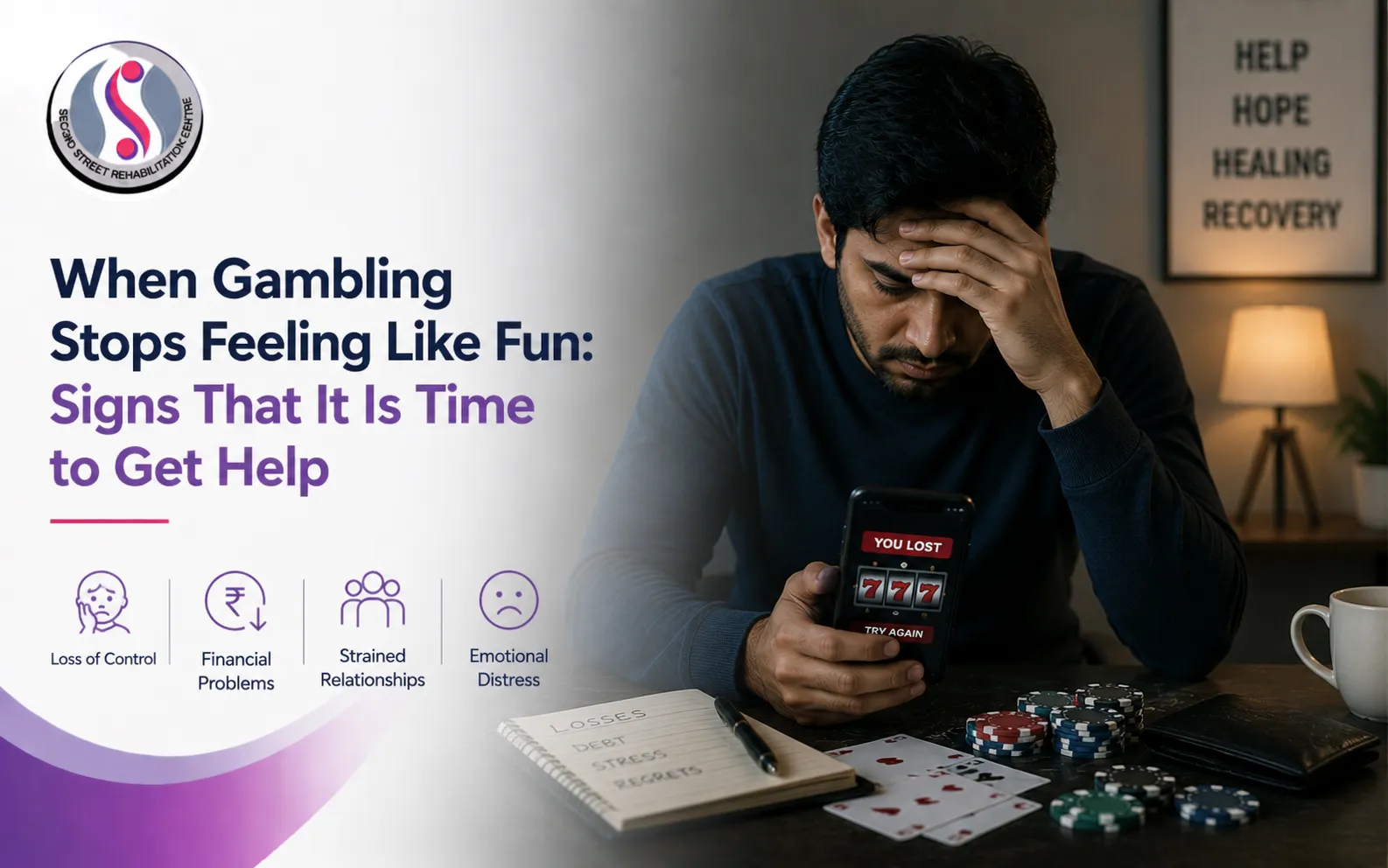
Gambling can start as simple fun. A person may place a small bet. They may play cards with friends. They may use an app during a match. Most people can stop and move on. Trouble starts when gambling begins to control time, money, mood, or trust at home.
The change is not always easy to see. A person may still work each day. They may still meet friends and look calm. Yet they may think about bets for hours. They may hide losses or move money in secret. They may keep saying that one win will fix everything.
These signs matter. Harm often grows before the family knows the full story. Early help can stop the damage from getting worse.
Look for loss of control
There is no fixed amount of money that proves a problem. The key sign is loss of control. Can the person stop when they plan to stop? Can they walk away after a loss? Can they keep money meant for food, rent, fees, or bills safe?
Warning signs include larger bets, secret loans, and lies about money. The person may chase losses. They may borrow, sell items, or use credit. They may also get angry when asked about gambling.
Some people also drink or use drugs. In that case, a family may seek help through a Nasha Mukti Kendra Mumbai. Gambling still needs its own plan. The triggers and money risks can be very different.
Why “just stop” may not work
From the outside, the answer can look easy. Stop betting. Delete the app. Do not carry cash. Yet urges can come back fast. Stress, boredom, sport, pay day, or a past win can act as a cue.
A loss can be an even stronger cue. The person may feel they must win the money back. This is called chasing a loss. It can turn one bad day into weeks of debt.
Willpower can help, but it may not be enough. A good plan changes both habits and access. It can limit money, block betting sites, and build new ways to deal with stress.
What good care can include
Care should start with a clear review. The person should be asked about bets, debt, mood, sleep, and past attempts to stop. Alcohol and drug use should also be checked when needed.
Talk therapy can help the person spot false beliefs about luck and control. Family work can help with trust and money rules. Simple steps can also help. These may include app blocks, lower credit limits, and safe control of key household funds.
Some people do well with visits to a therapist. Others need more structure. A focused Gambling rehab plan may help when the harm is severe or home is full of triggers.
The aim is not a few bet-free days. The aim is a safer life. It should become easier to face stress, money, and urges without placing another bet.
Frequently asked questions
Can gambling problems be treated? Yes. People can learn to manage urges and change harmful habits. The right plan depends on the person and the level of harm.
Does a person need huge debt before getting help? No. Lies, loss of control, family fights, and failed attempts to stop are enough reason to seek help.
Can family members help? Yes. They can protect key funds and support care. They should avoid shame and threats. Clear rules and calm support are usually more useful.