


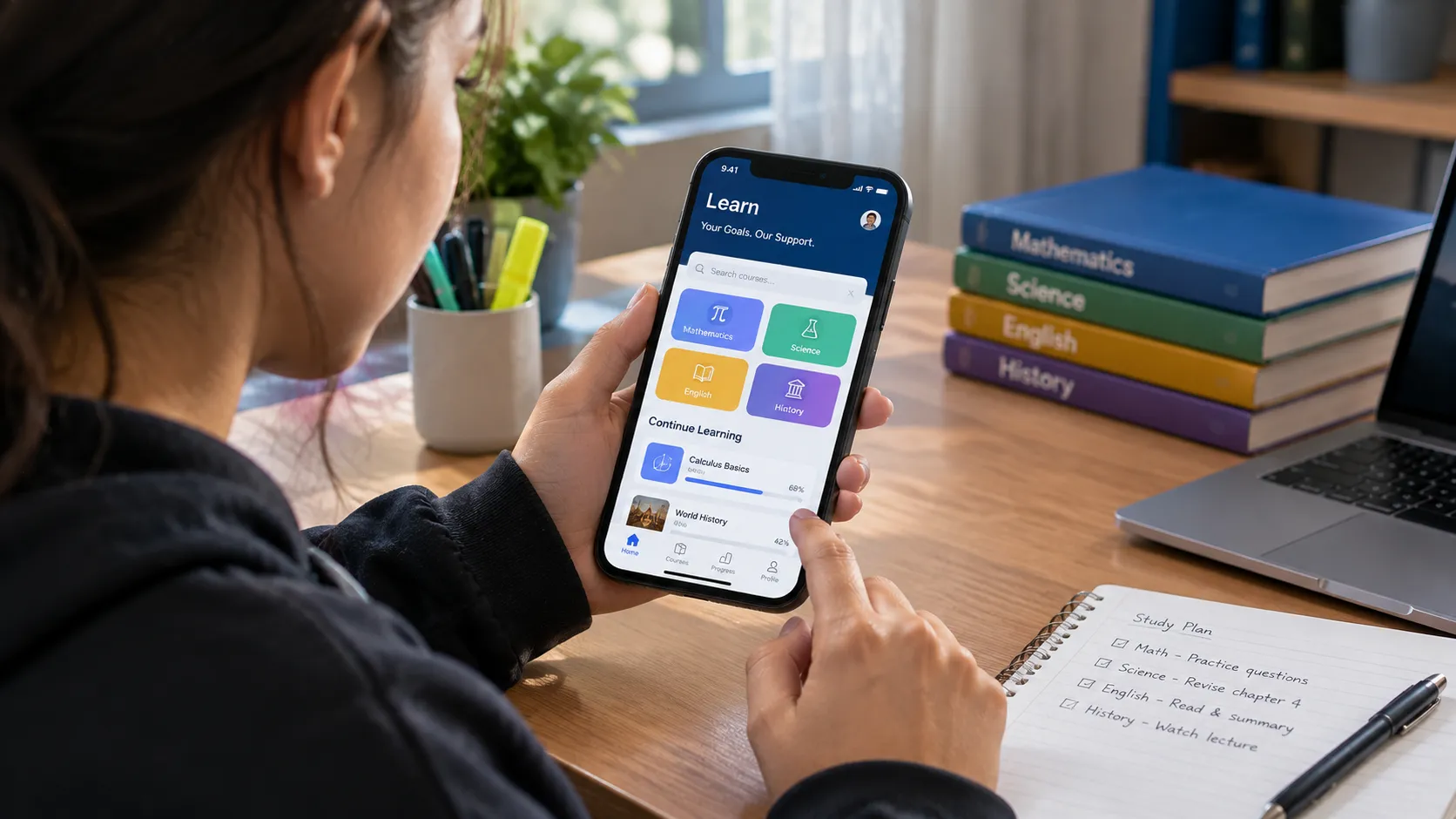
A kid who can’t sit still through a fifteen-minute lecture will happily spend forty-five minutes leveling up a character in a learning app, working through math problems the whole time without realizing it feels like a chore. That gap isn’t an accident. It’s the result of a good Education App Development company understanding something traditional classrooms have struggled with for decades: engagement isn’t about making content easier, it’s about making the process of learning feel worth showing up for.
Student engagement has been a stubborn problem for as long as formal education has existed, and mobile apps didn’t magically solve it. What they did was borrow techniques from an industry that spent decades perfecting attention game design and apply them to arithmetic, vocabulary, and everything in between. Here’s what’s actually working, and why.
Gamification Turned Practice Into Something Kids Choose to Do
Points, badges, streaks, levels these mechanics get dismissed as gimmicky sometimes, but the psychology behind them is solid. Immediate feedback and visible progress trigger the same reward pathways that make games genuinely enjoyable, and applying that structure to a math worksheet changes how a student experiences the exact same content.
A student grinding through twenty subtraction problems for a worksheet feels like drudgery. The same twenty problems framed as “beat your streak from yesterday” feels like a challenge worth accepting. The math hasn’t changed. The framing completely has.
Adaptive Learning Meets Students Where They Actually Are
A classroom of thirty students moving at one uniform pace inevitably leaves some kids bored and others completely lost. Adaptive learning apps solve this by adjusting difficulty in real time based on a student’s actual performance, rather than assuming everyone needs the same next lesson regardless of how the previous one went.
A student who breezes through fractions gets pushed toward harder material immediately. One who’s struggling gets more practice and a different explanation style before moving forward. This kind of personalization was never realistic in a traditional classroom setting with one teacher and dozens of students, but it’s become standard in well-built learning apps.
Microlearning Fits Into Attention Spans That Actually Exist
Modern attention spans, especially among younger students, don’t hold up well against forty-five-minute lecture blocks. Mobile learning apps leaned into shorter sessions instead five to ten minute lessons that fit into a study hall period, a bus ride, or the ten minutes before dinner. This isn’t dumbing content down. It’s matching the format to how attention genuinely works rather than fighting against it.
Breaking a semester’s worth of material into small, completable chunks also gives students more frequent moments of finishing something, and finishing things reliably builds the kind of momentum that keeps someone coming back the next day.
Instant Feedback Replaced the Multi-Day Wait
Traditional grading often means a student turns in an assignment and doesn’t find out what they got wrong for days, by which point the specific reasoning behind a mistake has usually faded from memory. Learning apps close that gap to seconds. A wrong answer gets an explanation immediately, while the student’s attention and the actual reasoning process are still fresh.
This immediacy matters more for engagement than it might seem. Waiting days for feedback disconnects the correction from the moment of confusion. Instant feedback keeps them tied together, which makes the correction actually land instead of getting filed away as an abstract grade on a returned paper.
Social and Collaborative Features Rebuilt Peer Learning
Study groups and peer tutoring have always helped learning stick, but coordinating them outside a classroom used to require actual logistics the same schedule, the same location, the same book open to the same page. Learning apps replicated the value of peer interaction through leaderboards, collaborative problem-solving features, and discussion threads that don’t require anyone to be in the same room at the same time.
Competitive elements work particularly well here. Friendly competition between classmates on a leaderboard taps into the same motivation that makes sports and games engaging, applied to something like vocabulary practice or algebra drills.
Parents and Teachers Got Real Visibility Into Progress
Traditional report cards offer a snapshot every several weeks, long after patterns have already formed. Learning apps now give parents and teachers dashboards showing exactly where a student is struggling in near real time which topics keep tripping them up, how much time they’re actually spending on the material, whether engagement is trending up or quietly dropping off.
This visibility allows intervention before a small gap becomes a large one. A teacher who notices a student stalling on fractions in week two can address it immediately, rather than discovering the gap on a test at the end of the unit when it’s already cost weeks of building on a shaky foundation.
Voice and Interactive Content Reached Different Kinds of Learners
Not every student learns best by reading text on a screen. Voice-guided lessons, interactive simulations, and video-based explanations have expanded who a learning app actually works for auditory learners, visual learners, students with reading difficulties who’ve historically been underserved by text-heavy educational materials.
This diversity of format matters because engagement isn’t universal. A format that captivates one student might leave another completely disengaged, and apps offering multiple ways to absorb the same content reach a meaningfully wider range of learning styles.
Building for Both Platforms Isn’t a Small Decision
Reaching students across different devices means development teams have to plan for both major platforms, and iOS App Development Cost specifically tends to run higher than Android in many cases due to Apple’s stricter design and review standards a real budgeting consideration for any school district or edtech company scoping a new app.
Why This Actually Matters
Engagement isn’t a soft metric tacked onto learning outcomes as an afterthought. It’s the precondition for them. A perfectly designed curriculum a student won’t open does nothing, and a student who actually wants to open the app tomorrow is a student who’s going to learn more this semester than one going through the motions out of obligation. Mobile learning apps didn’t replace good teaching. They gave good teaching a format that finally competes for attention on the same terms as everything else on a student’s phone.