


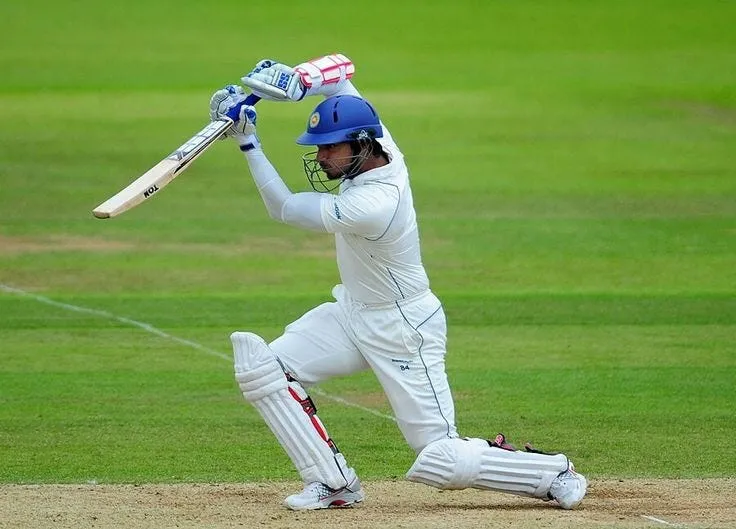
Modern batting techniques have undergone a radical transformation over the last decade, shifting the game from a traditional test of patience to a high-octane display of athletic geometry. If you were to transport a coach from the 1970s to a modern T20 match, they might hardly recognize the sport. The fundamental “elbow-high, side-on” approach that was once considered the only way to play has been supplemented, and in some cases replaced, by methods that prioritize power, range, and sheer audacity.
This evolution is not just about swinging harder at the ball but rather a complete overhaul of how a batsman perceives the field. The modern player no longer sees a set of fielders as obstacles but as puzzles to be solved through innovative angles. This change has been driven largely by the shorter formats of the game, where the pressure to score on every delivery has forced players to find runs in areas that were previously considered impossible or “un-cricket-like.”
The beauty of these new methods lies in their efficiency. While the classic cover drive remains one of the most aesthetic sights in the sport, it only earns four runs. A ramp shot over the keeper’s head, which requires significantly less physical effort but much higher levels of coordination and nerve, also earns four or six. It is this pragmatic approach to run-scoring that defines the current era of batting excellence.
The Shift from Side-On to Open-Chested Stances
One of the most visible changes in Modern batting techniques is the movement away from the strictly side-on stance. For generations, youngsters were taught to keep their leading shoulder pointing toward the bowler to protect their stumps and play close to the body. However, today’s elite players often adopt an “open” or “front-on” stance. By turning their chest slightly toward the bowler, they gain a clearer view of the ball with both eyes, improving depth perception.
This open stance also facilitates a more powerful swing path. In a traditional side-on position, the hips are often locked, limiting the range of motion. By opening up, a batsman can engage their core and hips more effectively, much like a baseball hitter or a golfer. This allows for greater torque and bat speed, which is essential for clearing the modern, massive boundary ropes.
Furthermore, the open stance helps in countering the modern bowler’s obsession with the “corridor of uncertainty.” When a batsman is more front-on, they are in a better position to play the ball through the leg side or whip a delivery from outside off-stump toward mid-wicket. This flexibility makes it much harder for a captain to set a field, as the batsman is no longer restricted by the limitations of a rigid, traditional posture.
Stability at the crease has also been reimagined. Instead of constant movement, many modern greats focus on a “still base.” They might use a trigger movement to get into position, but at the moment of the ball’s release, their head is dead still and their weight is perfectly balanced. This stability allows them to react to a 95-mile-per-hour delivery with the precision of a surgeon, regardless of whether they are moving forward or back.
The Science of Power Hitting and Bat Speed
Power hitting is no longer just about brute strength; it is a refined science involving biomechanics and kinetic chains. In the context of modern batting techniques, power is generated from the ground up. It starts with a firm grip on the turf, moves through the legs, rotates through the hips and torso, and finally explodes through the arms and the bat. If any part of this chain is weak, the shot loses its potency.
The “downswing” of the bat has also been studied extensively. Analysts have found that the most successful power hitters have a steep, high-to-low swing path that flattens out at the point of contact. This allows the bat to stay in the hitting zone for as long as possible. By maximizing the time the bat is aligned with the ball’s trajectory, the player increases their chances of finding the “sweet spot” even if their timing is slightly off.
Hand speed is perhaps the most critical component of this power. Many players now use weighted bats in training or participate in specialized “power hitting clinics” to increase the fast-twitch muscle fibers in their forearms and wrists. This allows them to wait a split second longer before committing to a shot, giving them more time to read the bowler’s variations, such as the back-of-the-hand slower ball or the knuckleball.
The grip itself has also seen variations. While the traditional “V” grip is still taught for control, many power hitters have moved toward a “bottom-hand dominant” grip. This provides the “flick” and power needed to clear the ropes on the leg side. However, the true masters of the game are those who can switch between a light, controlled grip for touch play and a firm, powerful grip for boundary hitting within the same over.
Innovative Strokeplay and 360-Degree Vision
The term “360-degree player” has become a badge of honor in the modern game, popularized by pioneers who refused to be limited by the traditional coaching manual. These players utilize modern batting techniques to exploit the vacuum of space behind the wicket. Shots like the scoop, the reverse-sweep, and the “ramp” have transformed the final overs of an innings into a nightmare for bowlers and captains alike.
The reverse-sweep, once considered a high-risk luxury, is now a standard tool for rotating strike against spinners. It forces the bowling team to move fielders out of the traditional point and cover regions, which in turn opens up gaps in the outfield. The psychological impact of this is massive; when a bowler knows a batsman can hit the same delivery to two completely opposite sides of the ground, their confidence begins to erode.
Then there is the “lap” or “scoop” shot. This involves using the bowler’s own pace against them by Redirecting the ball over the fine-leg or wicket-keeper’s head. It requires an incredible amount of “courage under fire,” as the batsman often has to move across their stumps, exposing all three sticks to the bowler. Yet, when executed correctly, it is virtually indefensible because placing a fielder directly behind the keeper is rarely a tactical option.
The “switch hit” is perhaps the most controversial of these innovations. By changing their grip and stance from right-handed to left-handed as the bowler runs in, the batsman completely resets the field. This level of ambidexterity is a testament to the hours of practice players now put into their craft. It is no longer enough to be a master of your own style; you must be able to mimic the opposite style to keep the opposition guessing.
Adapting Modern Batting Techniques Across Formats
One of the greatest challenges for a contemporary cricketer is the constant “format-switching.” A player might be required to play a grinding, five-day Test match one week and a high-velocity T20 match the next. The best in the world have developed a “mental volume knob” for their modern batting techniques, allowing them to dial their aggression up or down based on the situation.
In Test cricket, the modern technique still values the “leave” and the ability to defend, but even here, the influence of T20 is visible. We now see Test scores of 400 plus being chased in record time because batsmen are no longer afraid to use their feet to spinners or play expansive shots early in their innings. The fear of failure has been replaced by a desire to put the bowler under immediate pressure.
Conversely, in the shorter formats, the focus is on “range hitting.” A batsman might have a specific “arc” where they are most comfortable hitting sixes. Their strategy involves manipulating their position in the crease to ensure the ball lands in that arc. If a bowler tries to bowl wide, the batsman might step across to pull it; if the bowler bowls straight, they might clear their front leg to loft it over extra cover.
The use of the crease has become a sophisticated art form. By standing deep in the crease, a batsman can turn a potential yorker into a half-volley. By stepping down the track, they can turn a good-length ball into a full toss. This constant movement forward and back disrupts the bowler’s “sighting” and makes it impossible for them to settle into a rhythm. It is a game of pro-active disruption.
The Role of Technology and Video Analysis
Modern players have an advantage that the legends of the past never had: instant, high-definition feedback. Technology has become an inseparable part of developing and refining a player’s game. High-speed cameras can capture every micro-movement of a batsman’s feet and hands, allowing coaches to identify flaws that are invisible to the naked eye.
Virtual Reality (VR) is also making its way into the training ground. Players can wear VR headsets and “face” the world’s fastest bowlers in a simulated environment. This allows them to practice their trigger movements and shot selection without the physical toll of facing 90-mph deliveries in the nets. It builds the “mental maps” required to react instinctively during a real match.
Data analytics also play a huge role in tactical preparation. A batsman will go into a match knowing exactly which areas a specific bowler tends to target in the first ten overs versus the last five. They will know if a bowler has a tendency to bowl a slower ball after being hit for a boundary. This information allows the batsman to “pre-meditate” with a much higher success rate, as their guesses are backed by statistical probability.
Wearable sensors on the bat are another innovation. These sensors track the “swing plane,” “impact power,” and “twist” of the bat at the moment of contact. By looking at this data over time, a player can see if their technique is drifting or if they are losing bat speed. This objective data removes the guesswork from coaching, allowing for a more scientific approach to improvement.
The Psychological Edge and Mental Toughness
No amount of technical skill can compensate for a lack of mental clarity. The modern game is played at such a fast pace that there is no time for doubt. One of the most important modern batting techniques is “breath work” and “routines.” You will often see a batsman step away from the crease, readjust their gloves, and take a deep breath. This is a deliberate reset to clear the mind of the previous ball.
The “fearless” brand of cricket we see today is a result of a psychological shift in the coaching environment. In the past, getting out to a “fancy” shot was a punishable offense that could lead to a player being dropped. Today, coaches often encourage players to take those risks, provided they are calculated. This “freedom to fail” has unlocked a level of creativity that the game has never seen before.
Visualisation is another tool used by elite batsmen. Before they even step onto the field, they have already “played” the innings in their mind. They visualize the bowlers they will face, the shots they will play, and the feeling of the ball hitting the middle of the bat. By the time they reach the middle, the situation feels familiar, which significantly reduces performance anxiety.
The ability to “stay in the moment” is what separates the greats from the good. In a high-pressure chase, it is easy to get overwhelmed by the required run rate. Modern players are trained to focus only on the next ball. By breaking a massive target down into small, manageable chunks, they can maintain their technical integrity even when the game is on the line.
Bio-mechanics and Fitness for the Long Haul
The physical demands of modern batting are immense. A player in a long T20 innings might be required to sprint between the wickets twenty times and swing the bat with maximum force thirty times, all while maintaining absolute focus in high heat. This has led to a focus on “functional fitness” that is specific to the movements of a batsman.
Core strength is the foundation of the modern game. A strong core provides the stability needed to maintain balance during expansive shots and the power to rotate the hips quickly. Exercises like medicine ball slams and rotational cable pulls have become staples in the gym for cricketers. The goal is to build a body that is both explosive and resilient to injury.
Flexibility is equally important, especially for those who play unconventional shots. A player who frequently plays the scoop or the sweep needs exceptional mobility in their hips and spine. Yoga and specialized stretching routines are now common in professional locker rooms, helping players extend their range of motion and prevent the “stiffness” that often comes with age and heavy workloads.
Nutrition and recovery have also been professionalized. Players follow strict diets to maintain optimal body fat percentages and use ice baths, compression garments, and sleep tracking to ensure they are fully recovered for the next game. A tired body leads to a tired mind, and in a game of such fine margins, a split-second delay in reaction time can be the difference between a century and a duck.
The Evolution of Equipment
We cannot discuss batting techniques without mentioning the evolution of the cricket bat itself. Modern bats are significantly thicker than those used forty years ago, yet they are often lighter due to advanced drying techniques and “pressing” methods. This “big bat” era has changed the risk-reward ratio for the batsman. A mis-hit that would have been caught at mid-on in the 1990s now often flies over the ropes for six.
The “sweet spot” on a modern bat is also much larger and more forgiving. This has encouraged players to be more adventurous with their shot selection, knowing that they don’t necessarily have to hit the ball perfectly to get a result. However, this has also forced bowlers to become more skillful, leading to the development of the wide yorkers and slower-ball bouncers we see today.
Protective gear has also allowed players to be more courageous. With high-tech helmets, chest guards, and “arm-guards,” the fear of physical injury has been significantly reduced. This allows players to get into positions—like moving across the stumps—that would have been considered suicidal in an era with less effective protection. The equipment has provided the safety net that allows the creativity to flourish.
Even the grip on the bat has seen innovation. Different textures and thicknesses are used to suit different weather conditions and personal preferences. Some players prefer a thicker grip to help with power, while others prefer a thinner one for better “feel” and control. These minor adjustments are all part of the obsessive attention to detail that characterizes the modern professional.
The Future of Batting: What’s Next?
As we look to the future, it is likely that batting will continue to push the boundaries of physics. We are already seeing the emergence of “ambidextrous” batting as a more common trait in youth cricket. In twenty years, we might see players who are equally proficient from both stances, making the traditional “left-hand/right-hand” labels obsolete.
The integration of AI into coaching will also become more sophisticated. We might see “AI-powered coaches” that provide real-time tactical advice through ear-pieces (if the rules allow) or through visual cues during breaks. The battle between bat and ball will continue to be an arms race of data and technology, with each side constantly looking for a way to outsmart the other.
Whatever changes come, the core of the sport will remain a test of skill, temperament, and timing. The modern batting techniques we see today are simply the latest chapter in a story that has been unfolding for centuries. They represent the human spirit’s constant desire to innovate, to improve, and to find new ways to succeed under pressure.
For the aspiring young cricketer, the message is clear: learn the basics, but don’t be afraid to experiment. The coaching manuals of tomorrow are being written by the innovators of today. Whether you are playing a classical drive or a daring scoop, the goal remains the same—to dominate the bowler and lead your team to victory. The game has never been more exciting, and the art of batting has never been more diverse.
Read also :-
s muthusamy cricketer
rcb ka baap kaun team hai
मुंबई इंडियंस बनाम पंजाब किंग्स मैच का स्कोरकार्ड
राजस्थान रॉयल्स वि गुजरात टायटन्स सामन्याचे स्कोअरकार्ड
sri lanka a vs bangladesh a match scorecard
chhattisgarh cricket team vs jharkhand cricket team match scorecard
vidarbha cricket team vs kerala cricket team players