


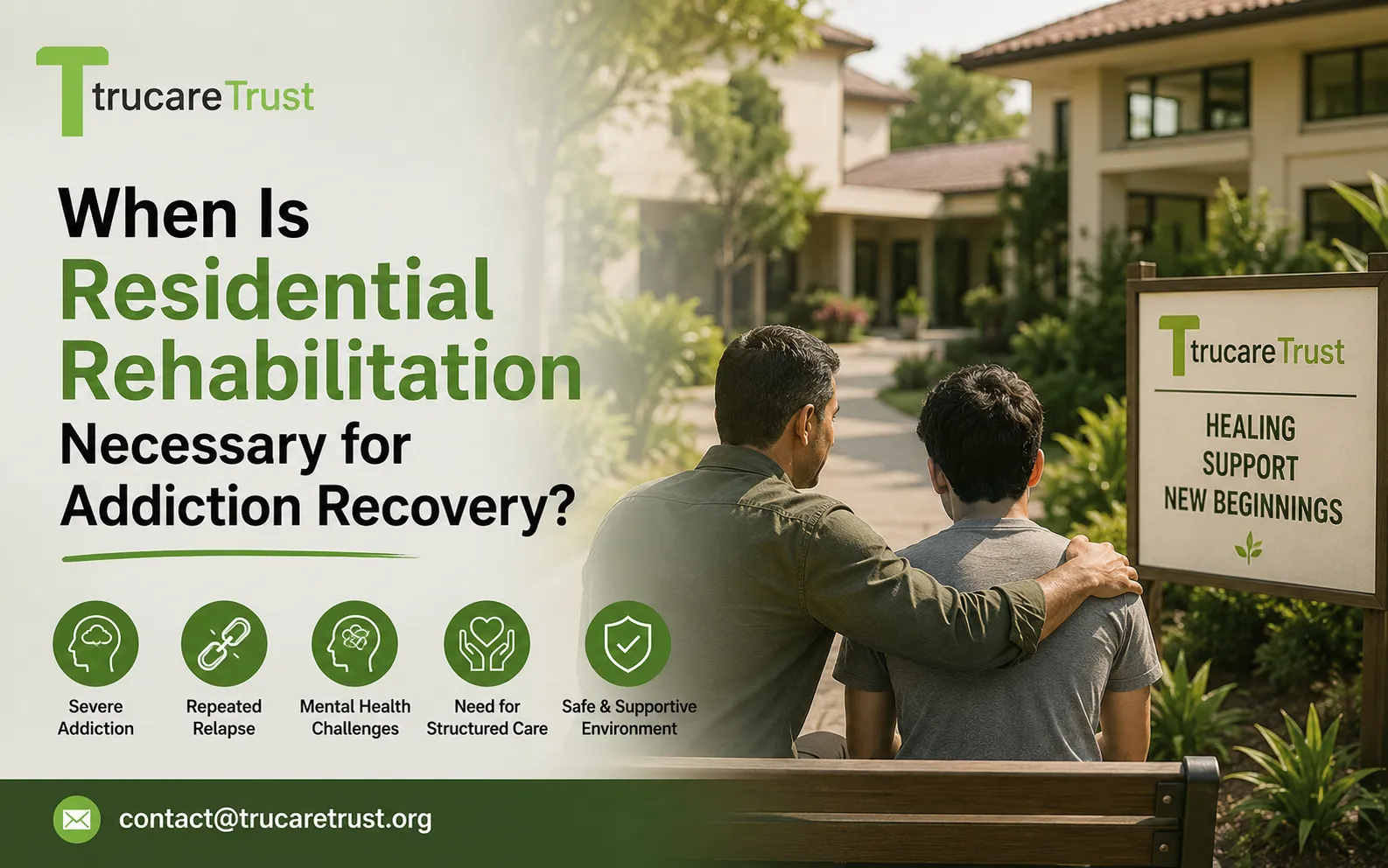
Not every person with a substance-use problem requires admission. Some recover with outpatient counselling, medical reviews and strong support at home. However, rehabs in Mumbai may be considered when health risks, repeated loss of control or an unsafe living environment make community-based care insufficient.
Withdrawal Could Be Medically Dangerous
Suddenly stopping alcohol, sedatives or some other substances can cause serious complications. Warning signs may include seizures, hallucinations, severe shaking, confusion, dehydration, agitation or major changes in blood pressure and pulse. These symptoms require urgent medical assessment, not home detoxification.
Residential admission can provide observation, prescribed medication and rapid access to emergency care. Detoxification should be clinically supervised and followed by continuing treatment, because managing withdrawal alone does not change the patterns that maintain dependence.
Substance Use Has Become Difficult to Control
Residential care may be appropriate when a person repeatedly uses more than intended, cannot stop despite genuine efforts, spends much of the day obtaining or recovering from substances, or continues despite serious harm. Frequent intoxication, overdoses, accidents, missed work and rapidly worsening health suggest that a higher level of structure may be needed.
India’s Ministry of Social Justice and Empowerment reported in its 2019 national survey that about 5.7 crore people required help for harmful or dependent alcohol use. Treatment need is common, but the correct level of care must still be decided individually.
The Home Environment Is Unsafe for Recovery
Outpatient treatment is harder when substances are easily available at home, family conflict is severe, violence is present or close contacts continue to drink or use drugs. Homelessness and the absence of a reliable caregiver can also make medication, meals and appointments difficult to manage.
A residential programme temporarily creates distance from immediate triggers. That protected setting is useful only when it includes meaningful therapy, medical care and preparation for returning to ordinary life.
Mental or Physical Health Needs Closer Monitoring
Depression, suicidal thoughts, psychosis, severe anxiety, trauma symptoms or cognitive problems can complicate addiction treatment. Liver disease, infections, malnutrition and other medical conditions may also require coordinated care. Immediate danger to the person or others calls for emergency services and specialist evaluation.
Residential treatment should not be used merely to confine someone who is inconvenient to the family. Consent, capacity, dignity and legal safeguards remain important. The Mental Healthcare Act, 2017 provides protections concerning treatment, confidentiality and humane care.
Regular review can determine whether continued admission remains justified and helpful.
Previous Treatment Has Not Been Enough
Repeated relapse does not mean that recovery is impossible. It may show that the treatment intensity, duration, diagnosis or aftercare plan needs revision. Admission can help when outpatient appointments are repeatedly missed, cravings remain overwhelming or several brief detoxifications have ended in rapid return to use.
When Outpatient Care May Be Suitable
Community-based treatment may be reasonable when withdrawal risk is low, housing is stable, the person can attend appointments and supportive relatives can help without policing every action. A qualified clinician should assess these factors rather than relying on a single symptom.
Before approaching rehabs in Mumbai, families should seek a medical and psychological assessment. Residential care becomes necessary when it offers a safer and more effective level of support than treatment at home—not simply because it appears more intensive.